
Vitamin K: A Breakthrough Treatment for Calciphylaxis
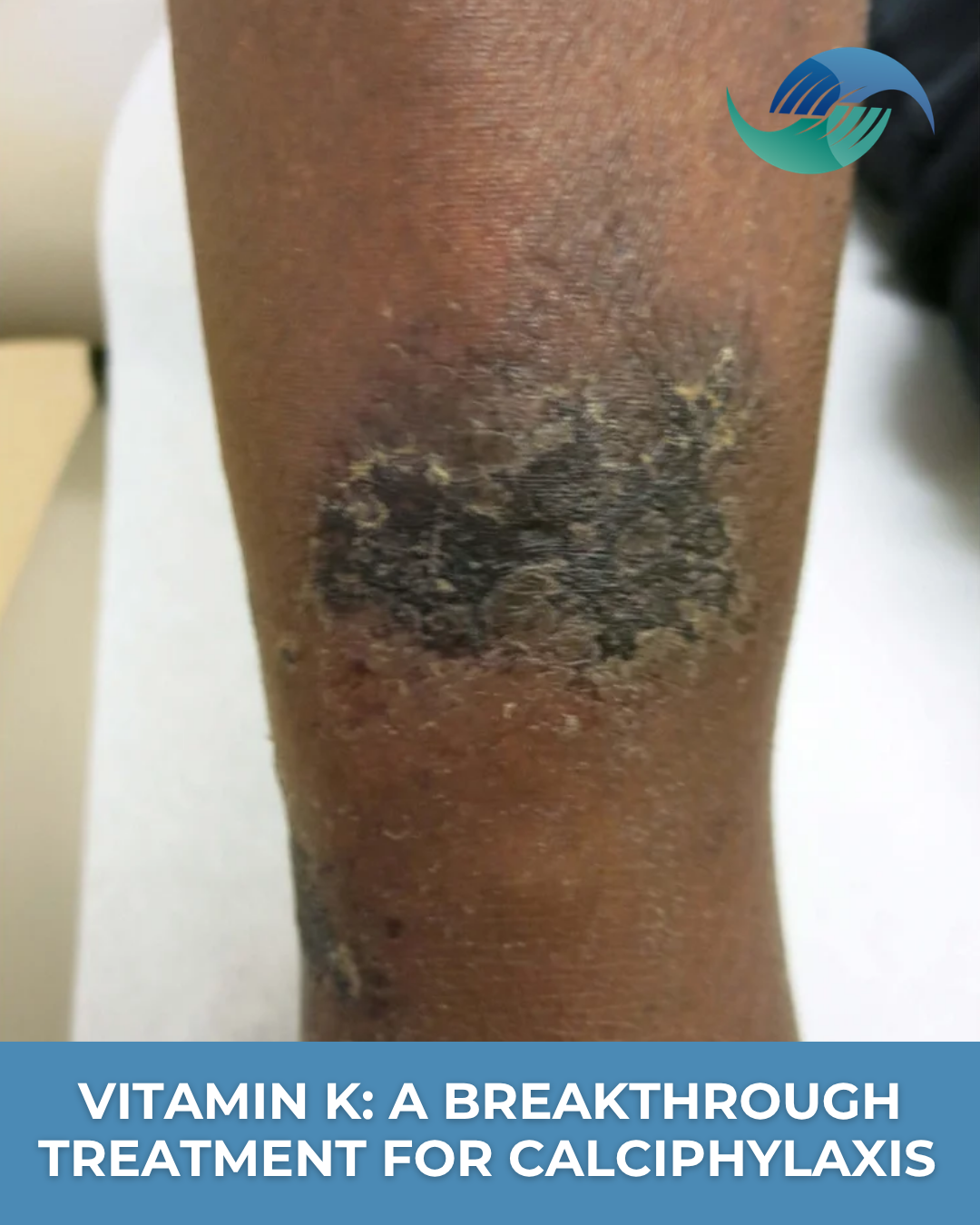
Vitamin K — specifically phytonadione (vitamin K1) — treats calciphylaxis by reactivating matrix Gla protein (MGP), the body's own inhibitor of vascular calcification. In a 12-week Massachusetts General Hospital trial, patients treated with oral phytonadione had 0% mortality versus 31% mortality with placebo, along with significant reductions in lesion size and pain. WoundCentrics has used vitamin K as a principal calciphylaxis treatment across its national network since 2019, with strong wound-healing outcomes and no significant adverse events to date.
What Is Calciphylaxis and Why Is It So Dangerous?
Calciphylaxis is a severe disease marked by calcification of small to medium-sized blood vessels, leading to painful skin necrosis and, in advanced cases, organ failure. It carries a one-year mortality rate of up to 70%, making it one of the deadliest conditions a wound care or nephrology team will encounter.
Management has historically been difficult because most available therapies address symptoms rather than the underlying vascular calcification process. That gap is exactly where vitamin K's mechanism becomes clinically significant.
How Does Vitamin K Actually Treat Calciphylaxis?
Vitamin K's therapeutic effect centers on activating matrix Gla protein (MGP), a key inhibitor of vascular calcification. When MGP is inactive — as it is in vitamin K deficiency — blood vessels lose a critical defense against calcium deposition, driving the pathophysiology of calciphylaxis.
Because vitamin K supplementation restores MGP activity, it addresses the disease's root biochemical cause rather than only managing downstream symptoms. This distinguishes it from older approaches that treat calciphylaxis as a wound-management problem alone.
Why Has Sodium Thiosulfate Fallen Short?
Sodium thiosulfate (STS) has long been the default calciphylaxis treatment, valued for its calcium-chelating and antioxidant properties. Despite widespread use, its record on hard outcomes is weak:
No consistent survival benefit has been demonstrated across studies of STS.
Adverse effects include nausea, hypotension, and potential worsening of hypercalcemia.
STS treats symptoms broadly rather than correcting the specific deficiency driving vascular calcification.
These limitations are why a therapy that targets the disease mechanism directly represents a meaningful shift in clinical strategy.
What Did the Mass General Phytonadione Trial Show?
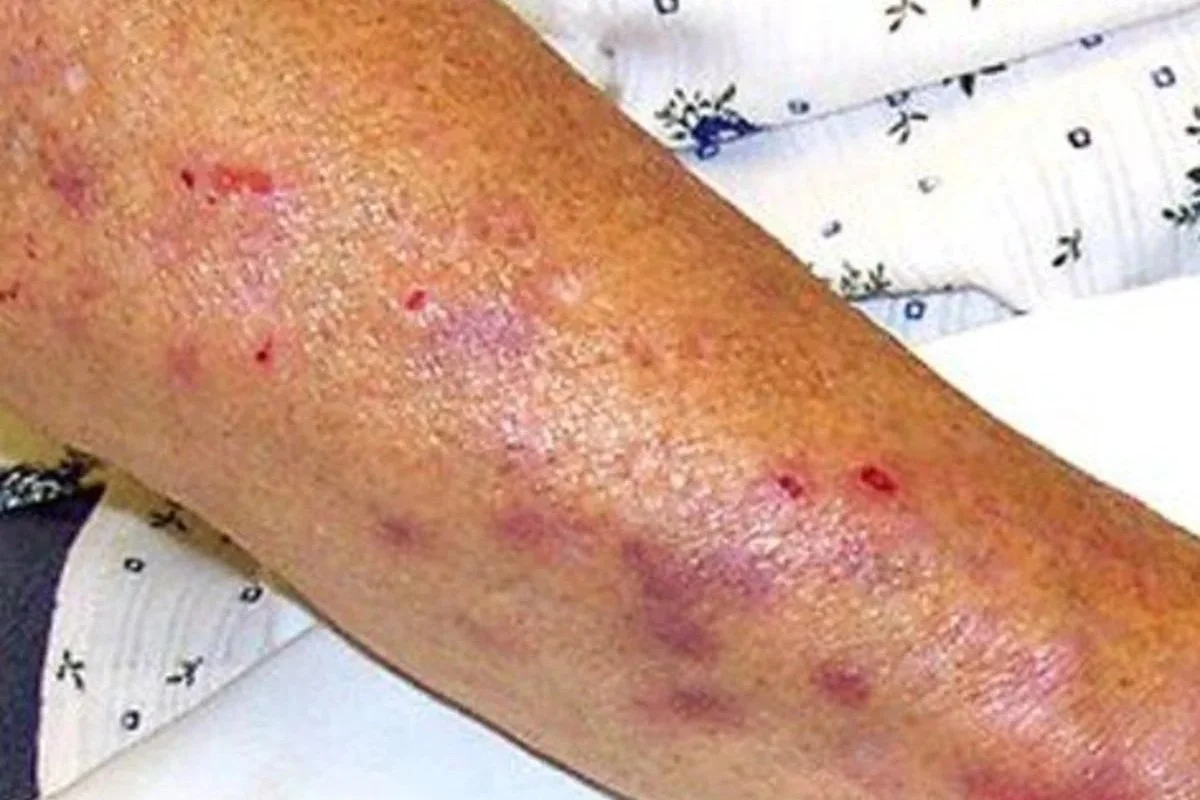
The pivotal evidence comes from a phase 2, randomized, double-blind, placebo-controlled trial led by Dr. Sagar U. Nigwekar, MD, MMSc, of Massachusetts General Hospital (ClinicalTrials.gov identifier NCT02278692). As reported in the trial abstract presented at the American Society of Nephrology's Kidney Week 2019: over 12 weeks, 26 hemodialysis patients with calciphylaxis were randomized to oral phytonadione 10 mg or placebo, three times weekly (ASN Kidney Week 2019 abstract TH-PO1188).
Results at 12 weeks:
Mortality: 0% with phytonadione vs. 31% with placebo (p=0.03).
Significant improvement in the size of the largest skin lesion (p=0.02).
Significant reduction in the combined size of all lesions (p<0.001).
Significant reduction in pain intensity (p<0.001).
Phytonadione produced a significantly greater reduction in inactive (uncarboxylated) MGP levels than placebo (p<0.001), directly linking the treatment mechanism to clinical improvement.
As summarized in coverage of the presentation: "In a 12-week phase 2 study that enrolled 26 patients with calciphylaxis, Sagar U. Nigwekar, MD, MMSc, of Massachusetts General Hospital in Boston, and colleagues found that patients treated with oral phytonadione, a form of vitamin K, was associated with a significantly lower mortality rate compared with placebo at 12 weeks (0% vs 31%). In addition, phytonadione-treated patients experienced significant decreases in the size of a patient's largest skin lesion, the combined size of all lesions, and pain intensity compared with placebo" (Renal & Urology News).
Citation: Nigwekar SU, Krinsky S, Thadhani RI, et al. Phase 2 trial of phytonadione in calciphylaxis. Presented at ASN Kidney Week 2019, Nov 5–10, Washington, DC. Poster TH-PO1188.
What Has WoundCentrics Observed in Clinical Practice?
Dr. Marcus Gitterle, Chief Medical Officer of WoundCentrics — a physician-led wound care specialty group treating calciphylaxis in more than 100 facilities across the US — reports that the organization adopted vitamin K as a principal calciphylaxis treatment strategy in 2019, based directly on the Mass General trial evidence.
Since then, WoundCentrics has seen excellent results in wound healing and mortality risk reduction, with no significant adverse events to date. Despite this track record, the WoundCentrics team notes it has yet to encounter another clinician outside its own group who is familiar with this treatment strategy — underscoring how far clinical awareness still needs to travel.
Why Will Vitamin K Likely Replace Older Calciphylaxis Treatments?
Three factors point toward vitamin K becoming the preferred first-line strategy:
Targeted action. Unlike STS, which manages symptoms broadly, vitamin K directly corrects the vitamin K deficiency that inactivates MGP — the core mechanism driving calciphylaxis.
Favorable safety profile. With appropriate monitoring, vitamin K supplementation avoids the nausea, hypotension, and hypercalcemia risk associated with STS.
Mortality reduction. The Nigwekar trial's 0% vs. 31% mortality difference represents a magnitude of benefit rarely seen in calciphylaxis research.
Vitamin K1 vs. K2: Which Form Should Clinicians Use?
Vitamin K exists in two major dietary forms, and the distinction matters clinically:
Vitamin K1 (phylloquinone) — found mainly in green leafy vegetables. It is primarily active in the liver, where it produces blood-clotting proteins.
Vitamin K2 (menaquinone) — found mainly in fermented foods uncommon in the US diet (e.g., natto). It is primarily active outside the liver, where it activates matrix Gla protein.
K2 is roughly 10 times as potent as K1 at activating MGP, while being only about one-tenth as active in hepatic clotting-factor synthesis. That combination makes K2 the more targeted choice for calciphylaxis: it drives the desired anti-calcification effect while carrying a lower theoretical risk of promoting a hyper-coagulable state.
What Is the Recommended Vitamin K Dosing Protocol?
In the Nigwekar Mass General trial, patients received vitamin K1, 10 mg orally, three times per week. Because most hospital formularies do not stock K2, inpatient protocols typically start with this K1 regimen.
Upon discharge, transitioning patients to vitamin K2, 1 mg daily, is preferable given K2's greater specificity for MGP activation. Practical prescribing notes:
Over-the-counter K2 products typically contain 90 mcg to 1 mg of K2 per capsule.
Clinicians should select a preparation delivering at least 600 mcg of K2, dosed as two capsules orally daily, to more precisely target MGP activation while limiting thrombotic risk.
Research on menaquinone supplementation — including Schurgers et al.'s controlled comparison of synthetic vitamin K1 and natto-derived menaquinone-7 — has not shown an association between vitamin K2 intake and increased thrombosis risk in patients not on vitamin K antagonist therapy (Schurgers LJ, Teunissen KJ, Hamulyák K, et al. Blood. 2007;109(8):3279-3283).
The Bottom Line for Clinical Teams
Sodium thiosulfate served its purpose when treatment options for calciphylaxis were limited. Vitamin K, by addressing the root biochemical cause rather than managing symptoms, offers both meaningful symptom relief and a profound reduction in mortality risk. Clinicians managing calciphylaxis — particularly in dialysis, nephrology, and wound care settings — should become familiar with vitamin K treatment protocols given the strength of the available trial evidence and multi-facility clinical experience supporting it.
Frequently Asked Questions
Q: What is calciphylaxis and why is it so deadly?
A: Calciphylaxis is a condition in which small to medium-sized blood vessels calcify, causing skin necrosis and potential organ failure; it carries a one-year mortality rate of up to 70%, making early, effective treatment critical.
Q: How does vitamin K treat calciphylaxis?
A: Vitamin K activates matrix Gla protein (MGP), the body's natural inhibitor of vascular calcification, directly addressing the biochemical deficiency that drives calciphylaxis rather than only managing its symptoms.
Q: What did the Mass General vitamin K trial find?
A: In a 12-week, placebo-controlled trial of 26 hemodialysis patients with calciphylaxis led by Dr. Sagar Nigwekar, oral phytonadione (vitamin K1) was associated with 0% mortality versus 31% with placebo, along with significant reductions in lesion size and pain.
Q: Should clinicians use vitamin K1 or K2 for calciphylaxis?
A: Inpatient protocols typically use vitamin K1 (10 mg orally, three times weekly) because most hospital formularies stock it, but vitamin K2 (1 mg daily, using a product with at least 600 mcg of K2) is preferable after discharge because K2 is roughly 10 times more potent at activating matrix Gla protein.
Q: Does vitamin K2 increase the risk of blood clots?
A: Research comparing synthetic vitamin K1 and natto-derived menaquinone-7 has not found an association between vitamin K2 intake and increased thrombosis risk in patients who are not taking vitamin K antagonist medications such as warfarin.
Q: Is vitamin K a replacement for sodium thiosulfate in calciphylaxis?
A: Evidence increasingly favors vitamin K as a primary treatment because it targets the underlying MGP deficiency and shows a stronger mortality benefit than sodium thiosulfate, which has not consistently demonstrated a survival advantage and carries more frequent side effects.
Talk to WoundCentrics About Calciphylaxis Protocols
Calciphylaxis outcomes hinge on early, mechanism-based treatment — and most clinical teams still haven't encountered vitamin K's role in managing it. If your hospital, LTACH, or wound center wants physician-led guidance on building or refining a calciphylaxis protocol, contact WoundCentrics to speak with a member of our clinical leadership team.
Sources