
Hyperbarics: The Most Misunderstood Tool in Modern Medicine
Hyperbaric oxygen therapy (HBOT) is FDA-cleared to treat more than a dozen medical conditions, including diabetic foot ulcers that fail standard care, compromised skin grafts, and radiation injury — yet it remains chronically underused. A 2021 meta-analysis of 11 randomized controlled trials found that adjunctive HBOT nearly halves the odds of major amputation in diabetic foot ulcers (odds ratio 0.53) and quadruples the odds of complete ulcer healing (odds ratio 4.00) (Moreira da Cruz et al., 2022, Annals of Vascular Surgery via PubMed). Despite this evidence, most referring providers receive little to no HBOT training, and patients often reach hyperbaric medicine only after months of ineffective wound care.
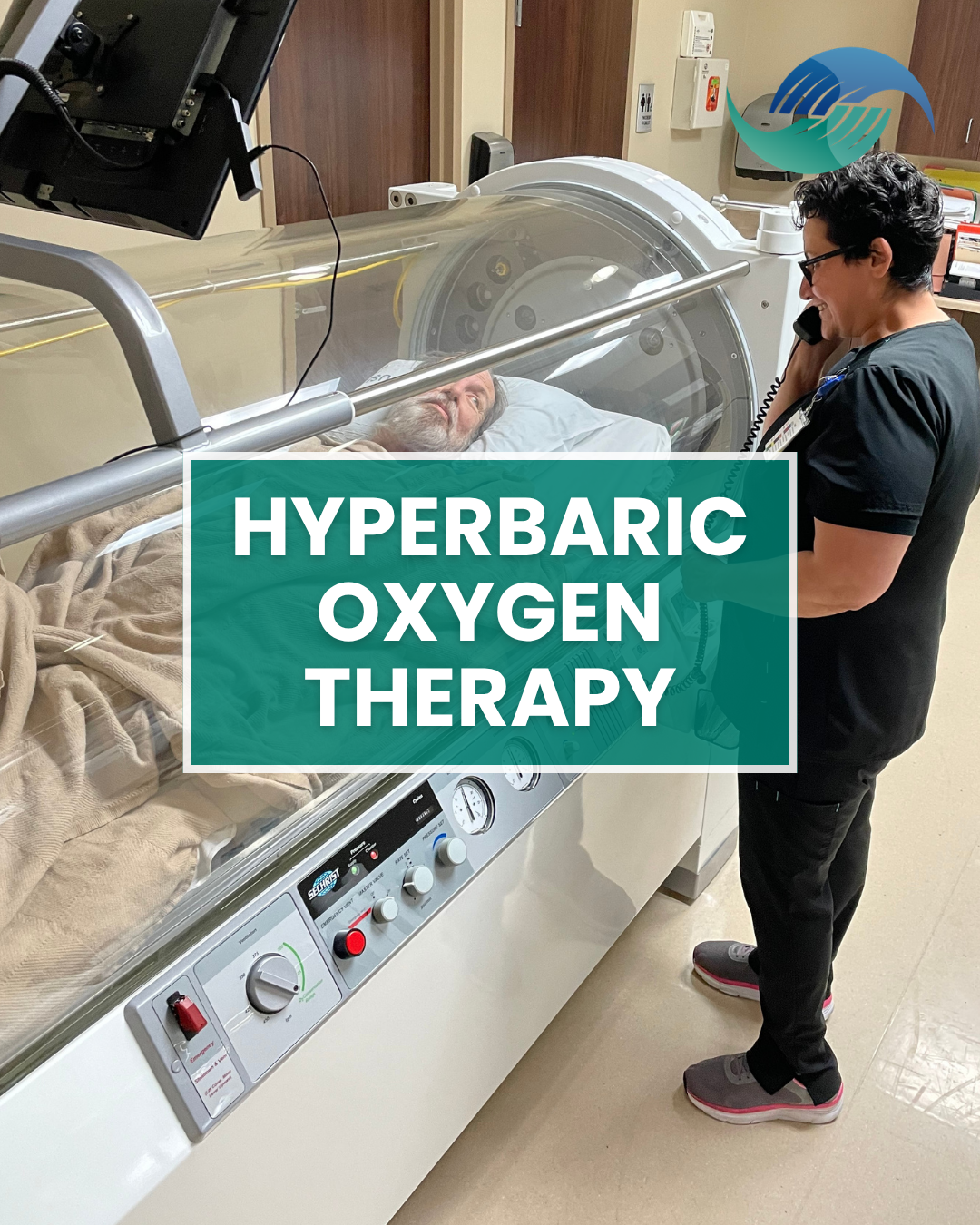
What Is HBOT Actually Approved to Treat?
HBOT is not experimental or fringe medicine — it is a Class II medical device therapy with FDA-cleared indications, and the Undersea and Hyperbaric Medical Society (UHMS) maintains the authoritative list of approved indications used by hospitals and payers nationwide (UHMS HBO Indications). Current UHMS-approved indications include:
Diabetic and other problem wounds — enhancement of healing in selected ischemic, non-healing wounds
Chronic refractory osteomyelitis
Delayed radiation injury (soft tissue and bony necrosis, including radiation cystitis, proctitis, and osteoradionecrosis)
Compromised skin grafts and flaps
Necrotizing soft tissue infections, including necrotizing fasciitis
Crush injury, compartment syndrome, and acute traumatic ischemias
Carbon monoxide poisoning (with or without cyanide poisoning)
Gas gangrene (clostridial myonecrosis)
Air or gas embolism
Decompression sickness
Severe anemia when transfusion is not an option
Central retinal artery occlusion
Acute thermal burns
Idiopathic sudden sensorineural hearing loss
Avascular necrosis (aseptic osteonecrosis)
FDA clearance and UHMS approval are closely linked: the FDA has cleared hyperbaric chamber devices for 13 core indications drawn directly from the UHMS list, and the agency has repeatedly cautioned that HBOT is not proven effective for conditions like cancer, autism, or diabetes itself (as opposed to its complications) (FDA consumer update via Drugs.com; Harvard Health). The FDA also recommends that HBOT be delivered only at UHMS-accredited facilities, given rare but serious device-related risks such as fire (FDA letter to health care providers, August 2025).
Why Is HBOT So Misunderstood by Referring Providers?
Most physicians receive minimal HBOT exposure during training, often encountering it only as a footnote in decompression sickness or advanced wound care lectures. That gap in education creates lasting misconceptions:
Providers assume HBOT is outdated or purely experimental, despite decades of clinical use and a defined FDA/UHMS indication list.
HBOT gets mentally filed as a "last resort," rather than a standard-of-care adjunct for specific, well-defined conditions.
Referrals happen late — often after a wound has already been labeled a treatment "failure" — instead of early in the care pathway when outcomes are best.
In reality, hyperbaric therapy plays a defined, evidence-based role in treating diabetic foot ulcers, radiation-induced tissue damage, compromised grafts and flaps, and ischemic conditions where impaired oxygen delivery is stalling healing. For patients at risk of amputation, HBOT can be limb-saving and life-altering — but only if it's considered early enough to matter.
What Does the Evidence Show for Diabetic Foot Ulcers and Amputation Prevention?
Diabetic foot ulcers carry high stakes: more than 60% of non-traumatic lower-limb amputations in the United States occur in people with diabetes, and a foot ulcer precedes roughly 85% of those amputations (UHMS Clinical Practice Guideline for HBOT in Diabetic Foot Ulcers). The same guideline notes that after a single-leg amputation, 56% of patients lose the contralateral leg within three to five years, and the five-year mortality rate reaches 60% — underscoring why timely, effective wound intervention matters as much as the wound itself.
The UHMS clinical practice guideline, built on randomized controlled trial and observational data, draws a clear threshold for HBOT use:
Wagner Grade 2 or lower ulcers: the guideline suggests against using HBOT — evidence does not support benefit at this severity.
Wagner Grade 3 or higher ulcers with no significant improvement after 30 days of optimal wound care: the guideline recommends adding HBOT to standard treatment to reduce major amputation risk and improve healing.
Wagner Grade 3 or higher ulcers following surgical debridement (partial toe/ray amputation, deep-space abscess drainage, necrotizing infection): the guideline recommends acute post-operative HBOT, ideally starting within 24 hours of surgery.
A 2022 systematic review and meta-analysis of 11 RCTs (668 patients) found that patients receiving adjunctive HBOT had significantly lower odds of major amputation (OR 0.53), higher odds of complete ulcer healing (OR 4.00), and a 23.19% greater reduction in ulcer surface area at two weeks compared with standard care alone (Moreira da Cruz et al., PubMed). This is consistent with why comprehensive, protocol-driven foot care programs — of which hyperbaric referral is one component — have been shown to reduce amputation rates by 49% to 85% (UHMS Clinical Practice Guideline).
When Should a Physician Refer for HBOT?
HBOT is not a one-size-fits-all solution, but used appropriately and on time, it significantly improves healing outcomes. Providers should consider referral when patients meet any of the following:
Diabetic foot ulcers classified as Wagner grade III or higher, especially those without significant improvement after 30 days of optimal wound care
Chronic radiation injuries (e.g., cystitis, proctitis, osteoradionecrosis)
Compromised skin grafts or flaps with poor perfusion
Non-healing wounds refractory to standard therapy
Soft tissue infections, such as necrotizing fasciitis
Acute arterial insufficiencies or crush injuries
The key is not waiting until a wound is declared a "failure." HBOT should be built into the treatment plan from the outset — especially when comorbidities like diabetes, peripheral vascular disease, or prior radiation exposure are present.
→Learn how WoundCentrics builds hyperbaric referral protocols into hospital wound programs←
What Is the Real Cost of Delayed Referral?
Widespread misunderstanding of HBOT carries serious clinical and financial consequences. Many patients undergo months of ineffective outpatient wound care or repeated hospitalizations before HBOT is even considered. By the time they're referred, the wound may have deteriorated to the point where advanced therapies are less effective — or amputation becomes the only remaining option.
From a health system perspective, delayed or absent hyperbaric referral:
Increases total cost of care by extending healing timelines and driving repeat admissions
Undermines value-based care initiatives tied to wound outcomes and readmission metrics
Converts manageable outpatient cases into complex inpatient episodes, burdening hospitals, payers, and patients alike
How Does HBOT Actually Work to Heal Wounds?
Closing the gap between HBOT's potential and its current use starts with understanding the underlying science. Breathing 100% oxygen at increased atmospheric pressure:
Stimulates angiogenesis — the formation of new blood vessels into oxygen-starved tissue
Enhances leukocyte (white blood cell) activity, strengthening the body's infection-fighting response
Suppresses anaerobic infection, which thrives in low-oxygen wound environments
Accelerates tissue regeneration by restoring the oxygen gradient healing cells need to function
Health systems that pair this physiology with clear referral protocols — rather than treating HBOT as a footnote — give eligible patients access to treatment without unnecessary delay.
Frequently Asked Questions
Q: What conditions is hyperbaric oxygen therapy FDA-approved to treat?
A: The FDA has cleared hyperbaric chamber devices for indications that include diabetic and other problem wounds, compromised skin grafts and flaps, chronic refractory osteomyelitis, delayed radiation injury, necrotizing soft tissue infections, carbon monoxide poisoning, gas gangrene, air or gas embolism, decompression sickness, severe anemia, central retinal artery occlusion, acute thermal burns, and sudden sensorineural hearing loss, based on the UHMS-approved indication list (UHMS).
Q: Can hyperbaric oxygen therapy prevent amputation in diabetic foot ulcers?
A: Yes, for the right patients. A meta-analysis of 11 randomized controlled trials found adjunctive HBOT nearly halved the odds of major amputation (odds ratio 0.53) in patients with diabetic foot ulcers compared with standard care alone (PubMed).
Q: At what stage of a diabetic foot ulcer should HBOT be considered?
A: UHMS clinical practice guidelines recommend HBOT for Wagner grade III or higher ulcers that have not improved significantly after 30 days of optimal wound care, or immediately after surgical debridement of a Wagner grade III or higher wound; HBOT is not recommended for Wagner grade II or lower ulcers (UHMS Clinical Practice Guideline).
Q: Is hyperbaric oxygen therapy considered experimental or a last resort?
A: No. HBOT is a Class II FDA-cleared medical therapy with decades of clinical use and a defined set of approved indications; the FDA does caution, however, that it is not proven effective for unrelated conditions such as cancer or autism (FDA/Drugs.com).
Q: Why do so few physicians refer patients for HBOT?
A: Most providers receive minimal hyperbaric medicine training during medical school or residency, often encountering HBOT only briefly in the context of decompression sickness, which leaves lasting misconceptions about when it's appropriate to use.
Q: Where should patients receive hyperbaric oxygen therapy?
A: The FDA recommends HBOT be administered only at accredited hyperbaric facilities under physician supervision, due to rare but serious risks such as fire in oxygen-rich environments (FDA letter to health care providers).
Referring physicians and hospital administrators: don't let a lack of hyperbaric training in your network delay care for patients who could benefit. WoundCentrics provides physician-led hyperbaric medicine oversight, referral protocol development, and clinical education to help hospitals and wound centers integrate HBOT appropriately and on time — contact WoundCentrics to discuss a program consult. At WoundCentrics, we're not just managing wounds, we're pushing healing forward.
Sources