
Wounds That Hurt More Than Patients: How Poor Wound Care Drags Down Your CMS Star Rating
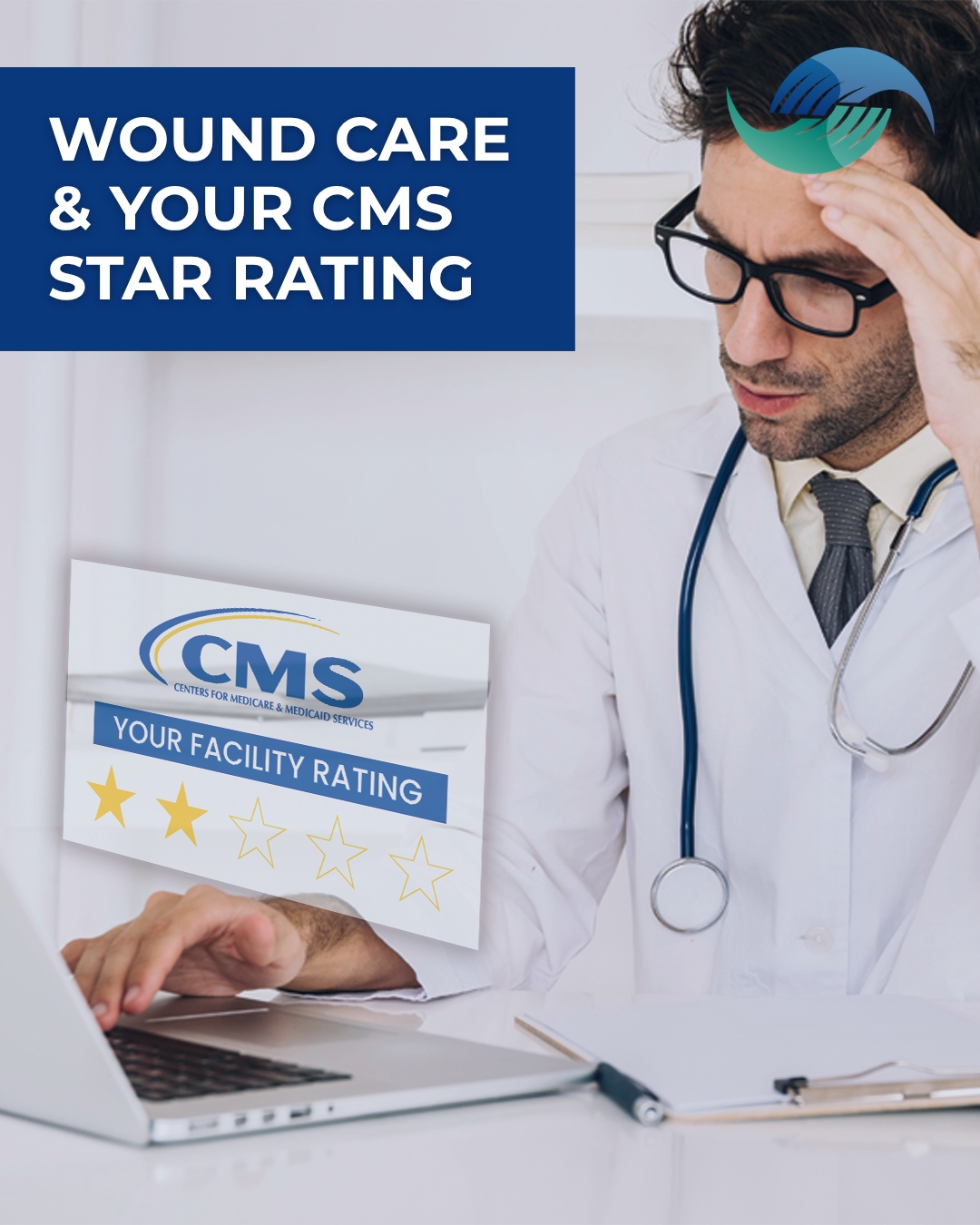
Poor wound care directly lowers a facility's CMS Star Rating by driving up hospital readmissions, triggering survey deficiencies, and dragging down the quality measures that feed the Five-Star Quality Rating System. Chronic wounds and pressure injuries are not just a clinical problem — they show up in the health inspection, staffing, and quality measure domains that determine your public rating on Medicare's Care Compare tool. Facilities that treat wound care as a strategic priority protect their rating and their reputation at the same time.
How Does CMS Score Wound Care in the Star Rating System?
CMS's Five-Star Quality Rating System assigns every Medicare- and Medicaid-certified nursing home an overall rating from 1 to 5 stars, plus separate scores for health inspections, staffing, and quality measures. These ratings are published on Medicare's Care Compare website, where families, discharge planners, and referral sources compare facilities before choosing one.
Wound care touches all three domains:
Health inspections — deficiencies in pressure injury prevention, treatment, or documentation are among the most commonly cited survey findings.
Staffing — under-resourced wound protocols often trace back to staffing gaps that surveyors flag independently.
Quality measures — CMS publicly reports the Percent of Residents with Pressure Ulcers and the Changes in Skin Integrity Post-Acute Care: Pressure Ulcer/Injury measure, both of which feed directly into the quality measure star score (CMS Quality Measures).
A single unhealed wound can therefore show up as a negative data point in more than one part of your public rating.
Why Do Wounds Drive Up Hospital Readmissions and ER Visits?
Untreated or poorly managed wounds become infected or complicated far more often, and that pushes residents into the emergency department or back into acute care. CMS tracks this directly through the Percent of Short-Stay Residents Who Were Re-Hospitalized after a Nursing Home Admission and the Percent of Short-Stay Residents Who Have Had an Outpatient Emergency Department Visit measures (CMS SNF Quality Reporting Program).
The clinical data backs up why this matters so much:
Patients with hospital-acquired pressure injuries face significantly higher 30-day readmission rates — 22.6% versus 17.6% for patients without one (AHRQ, cited in NPIAP Pressure Injury Fact Sheet).
More than 2.5 million people in the United States develop a pressure ulcer or pressure injury every year, and these wounds are linked to longer hospital stays and higher mortality (Agency for Healthcare Research and Quality).
Pressure injuries are associated with an estimated 60,000 deaths annually in the U.S. as a direct or contributing cause (AHRQ data, NPIAP Fact Sheet).
Every avoidable transfer to acute care is distressing for residents and families — and it is a visible red flag to surveyors, referral partners, and payers evaluating your facility's quality.
What Do Surveyors Look for in Wound Care Deficiencies?
Wound prevention, treatment, and documentation are recurring focus areas during state health inspections. Surveyors are trained to look for:
Timely, consistent risk assessment and prevention protocols for residents at risk of skin breakdown.
Documentation that matches the treatment actually delivered at the bedside.
Evidence that care plans are updated as a wound progresses or fails to improve.
Whether facility-wide practices align with the skin integrity measures CMS already collects through the Minimum Data Set (MDS).
Deficiencies in any of these areas directly impact your health inspection score, one of the three pillars of your overall Star Rating.
How Does Wound Care Affect Other Core Quality Measures?
Wound-related complications rarely stay contained to a single metric. Poorly managed wounds contribute to reduced mobility, increased pain, and slower functional recovery — all of which show up in CMS's broader set of long-stay and short-stay quality measures, including falls, weight loss, and overall resident outcomes (CMS Quality Measures). A resident managing an unhealed wound is also less likely to participate fully in therapy, which can depress functional outcome measures like the Discharge Function Score.
Each unhealed wound is not an isolated clinical event. It is a compounding risk factor that can touch pain management scores, mobility measures, and readmission data simultaneously.
Why Should Wound Care Be a Strategic Priority, Not an Afterthought?
In a value-driven reimbursement environment, CMS Star Ratings influence everything from consumer trust to payer contracting and referral volume. Facilities that continue to treat wound care as a secondary concern — behind staffing ratios or general clinical protocols — are leaving a major rating lever unmanaged.
Facilities that invest in evidence-based, physician-led wound management see the benefit compound: fewer avoidable hospitalizations, fewer survey citations, stronger quality measure performance, and a Star Rating that reflects the quality of care actually being delivered. Physician-led wound care consulting programs can help administrators close these gaps without adding internal headcount or retraining existing staff from scratch.
Frequently Asked Questions
Q: How does wound care affect a nursing home's CMS Star Rating?
A: Wound care affects all three domains of the CMS Five-Star Quality Rating System — health inspections (survey deficiencies), staffing (protocol gaps), and quality measures (publicly reported pressure ulcer and skin integrity rates) — so poor wound management can lower a facility's overall score in more than one place at once.
Q: What quality measures does CMS track related to wounds?
A: CMS publicly reports measures including the Percent of Residents with Pressure Ulcers, Changes in Skin Integrity Post-Acute Care: Pressure Ulcer/Injury, and short-stay rehospitalization and emergency department visit rates, all of which are influenced by wound care quality (CMS Quality Measures).
Q: Do pressure injuries really increase hospital readmissions?
A: Yes. Patients with hospital-acquired pressure injuries have a readmission rate of about 22.6% compared to 17.6% for patients without one, according to AHRQ-cited data (NPIAP Pressure Injury Fact Sheet).
Q: Where can families and referral sources see a facility's Star Rating?
A: CMS publishes Star Ratings for every Medicare- and Medicaid-certified nursing home on the Care Compare website, which replaced the former Nursing Home Compare site in December 2020.
Q: Can improving wound care actually raise a facility's Star Rating?
A: Yes. Because wound outcomes feed into health inspection findings, staffing-related deficiencies, and multiple public quality measures, reducing pressure injuries and improving healing rates can improve performance across all three rating domains simultaneously.
Q: Who is most responsible for wound care outcomes inside a facility?
A: Ultimate accountability sits with facility leadership and quality/compliance teams, but outcomes are driven by whether nursing staff have consistent, physician-supervised protocols, timely risk assessment, and documentation practices that match the care being delivered at the bedside.
Administrators who want a clear-eyed view of where wound care is putting their Star Rating at risk should not wait for the next survey cycle to find out. WoundCentrics works directly with hospital, SNF, and LTACH leadership to build physician-led wound programs that reduce avoidable hospitalizations, close documentation gaps, and protect the quality measures CMS reports publicly. Reach out to discuss a facility-specific assessment before your next inspection cycle.
Sources
CMS Five-Star Quality Rating System
CMS Quality Measures — Nursing Home Quality Initiative
CMS Skilled Nursing Facility (SNF) Quality Reporting Program — Measures and Technical Information
Medicare Care Compare
Agency for Healthcare Research and Quality — Pressure Ulcers
NPIAP 2021 Fact Sheet: About Pressure Injuries in US Healthcare Facilities (AHRQ-sourced data)