
The Effects of Smoking on Wound Healing
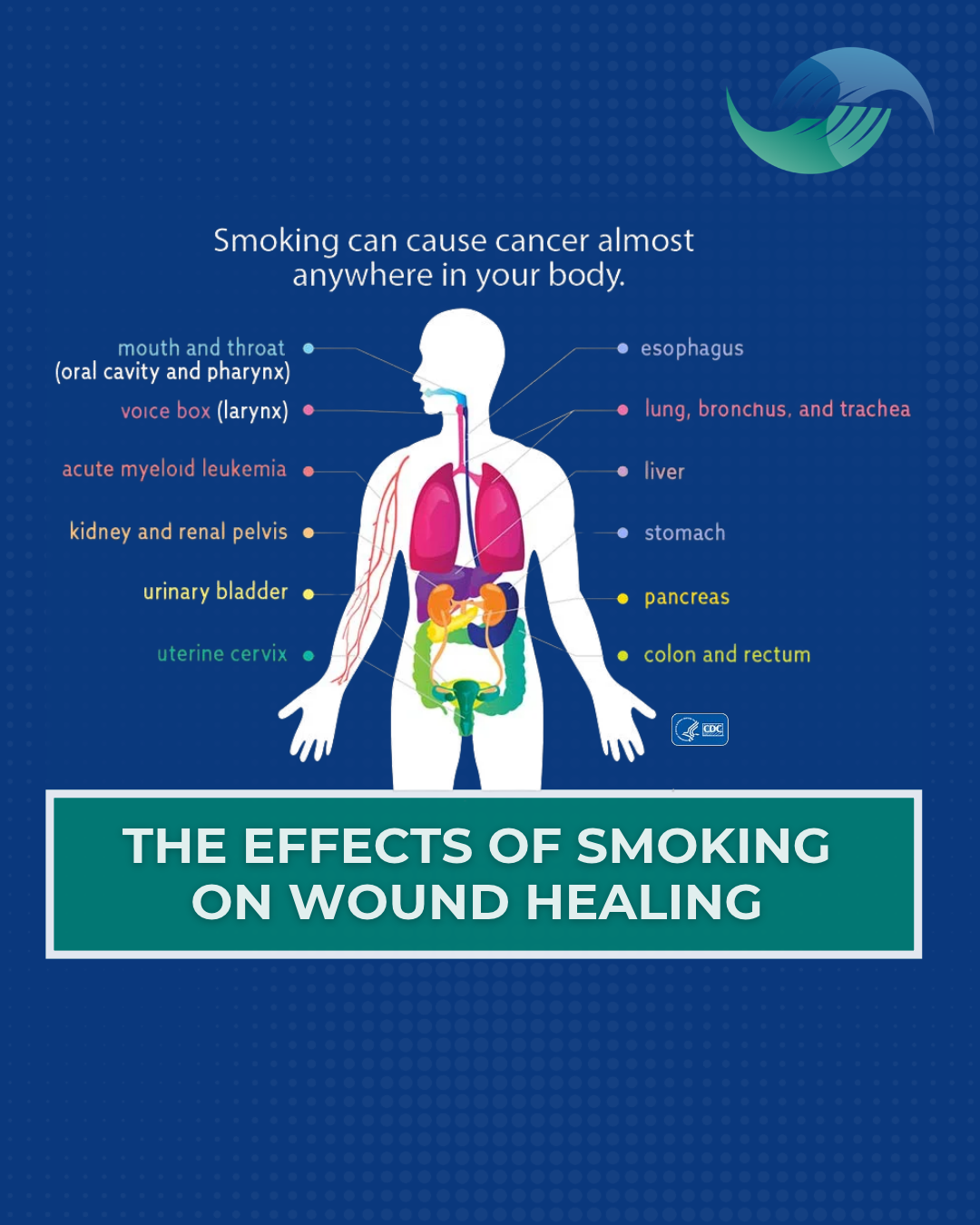
Smoking slows wound healing because nicotine constricts blood vessels and lowers oxygen delivery to tissue, while carbon monoxide and impaired immune function raise the risk of infection and treatment failure. The encouraging news: these effects are largely reversible, and measurable improvements in blood oxygen and circulation can begin within hours to weeks of quitting.
Why Is Smoking a Risk Factor for Chronic Wounds?
A chronic wound is rarely an isolated problem — it's often a symptom of underlying disease driven by both genetics and lifestyle. Genetic makeup isn't modifiable, but tobacco use is a lifestyle choice that significantly impairs wound healing.
The good news for patients who use tobacco products and have chronic wounds: quitting can meaningfully improve healing outcomes and lower overall wound care costs.
How Many Americans Still Use Tobacco?
Public health campaigns have emphasized smoking cessation for decades, yet tobacco use remains widespread and directly relevant to wound care outcomes nationwide.
An estimated 28.8 million U.S. adults (11.6%) currently smoke cigarettes, according to 2022 CDC data.
Cigarette smoking and secondhand smoke exposure cause more than 480,000 deaths each year in the United States — nearly 1 in 5 deaths, per the CDC.
Secondhand smoke exposure alone contributes to over 40,000 deaths among nonsmoking adults and 400 deaths in infants annually (CDC).
More than 16 million Americans are currently living with a disease caused by smoking (CDC).
For wound care teams, this means a significant share of patients presenting with non-healing wounds are also managing an active, modifiable risk factor.
How Does Smoking Impair Wound Healing?
Smoking increases overall mortality risk and worsens outcomes across nearly every organ system — and wound healing is no exception. Two mechanisms matter most in the wound bed:
Reduced blood flow: Nicotine causes vasoconstriction, narrowing blood vessels and reducing perfusion to the wound bed. Since circulation delivers the oxygen and nutrients cells need to close a wound, this directly delays tissue growth and repair.
Impaired immune defense: White blood cells depend on normal tissue oxygen levels to kill bacteria. When smoking lowers those oxygen levels, infection risk rises — increasing the chance of abscess formation, treatment failure, limb amputation, and even premature mortality.
Tobacco use also reduces delivery of wound-healing nutrients such as Vitamin C, Vitamin A, Vitamin D, and zinc to the wound bed, all of which are essential building blocks for tissue repair.
Does It Matter How the Nicotine Is Delivered?
No — the delivery method doesn't neutralize the risk. Nicotine exposure through cigarette smoking, vaping, smokeless tobacco, or even nicotine gum hinders the wound healing process, because vasoconstriction and reduced oxygen delivery are driven by nicotine itself, not just combustion byproducts.
Delayed healing compounds the burden on patients in very practical ways: more frequent doctor visits, lost wages, more wound care products and prescriptions, and a heavier overall financial burden.
→Physician-led wound care programs ←
What Happens to the Body After Quitting Smoking?
Recovery starts faster than most patients expect. According to the American Lung Association's timeline of quitting benefits, based on the U.S. Surgeon General's report on the health consequences of smoking:
20 minutes after quitting: Heart rate drops to a normal level.
12 to 24 hours after quitting: Carbon monoxide levels in the blood return to normal, and heart attack risk drops significantly.
2 weeks to 3 months after quitting: Circulation improves, heart attack risk continues to fall, and lung function begins to improve.
1 to 9 months after quitting: Coughing and shortness of breath decrease.
1 year after quitting: Added risk of coronary heart disease is cut roughly in half.
For wound care patients specifically, the earliest window matters most: improving blood oxygen levels within the first day and circulation within weeks directly supports the perfusion and oxygenation a healing wound bed needs.
The dangers of continued smoking to both wound healing and overall health far outweigh the short-term challenges of quitting. Chronic wounds are difficult to heal under the best circumstances — smoking cessation is one of the few interventions a patient can control that measurably speeds the process.
Frequently Asked Questions
Q: Does smoking really slow down wound healing?
A: Yes. Nicotine narrows blood vessels and reduces blood flow to the wound bed, while lowering tissue oxygen levels that white blood cells need to fight infection — together these effects delay tissue repair and raise the risk of complications like infection or treatment failure.
Q: How soon after quitting smoking does circulation improve?
A: Blood oxygen levels can normalize within 12 to 24 hours of quitting, and measurable circulation improvements can begin within two weeks to three months, according to the American Lung Association.
Q: Is vaping or nicotine gum safer than smoking for wound healing?
A: No. Nicotine itself — regardless of whether it comes from cigarettes, vaping, smokeless tobacco, or nicotine replacement gum — causes vasoconstriction and reduced oxygen delivery, so it can still impair wound healing.
Q: What nutrients does smoking deplete that are important for wound healing?
A: Tobacco use reduces delivery of key wound-healing nutrients including Vitamin C, Vitamin A, Vitamin D, and zinc to the wound site.
Q: How many people in the U.S. are affected by smoking-related illness?
A: More than 16 million Americans currently live with a disease caused by smoking, and smoking or secondhand smoke exposure causes more than 480,000 deaths in the U.S. each year, according to the CDC.
Q: Can quitting smoking actually help heal an existing chronic wound?
A: Yes. Because nicotine's effects on blood flow and oxygenation are reversible, quitting can improve perfusion and immune function at the wound site, supporting faster healing and reducing overall wound care costs.
If you or a patient in your care is managing a non-healing wound complicated by tobacco use, WoundCentrics' physician-led teams can build a coordinated treatment plan that addresses both the wound and the modifiable risk factors slowing recovery — contact us to discuss a consult or program partnership.
Sources