
Procedures Without Borders: How Bedside Debridement Is Advancing Inpatient Wound Care
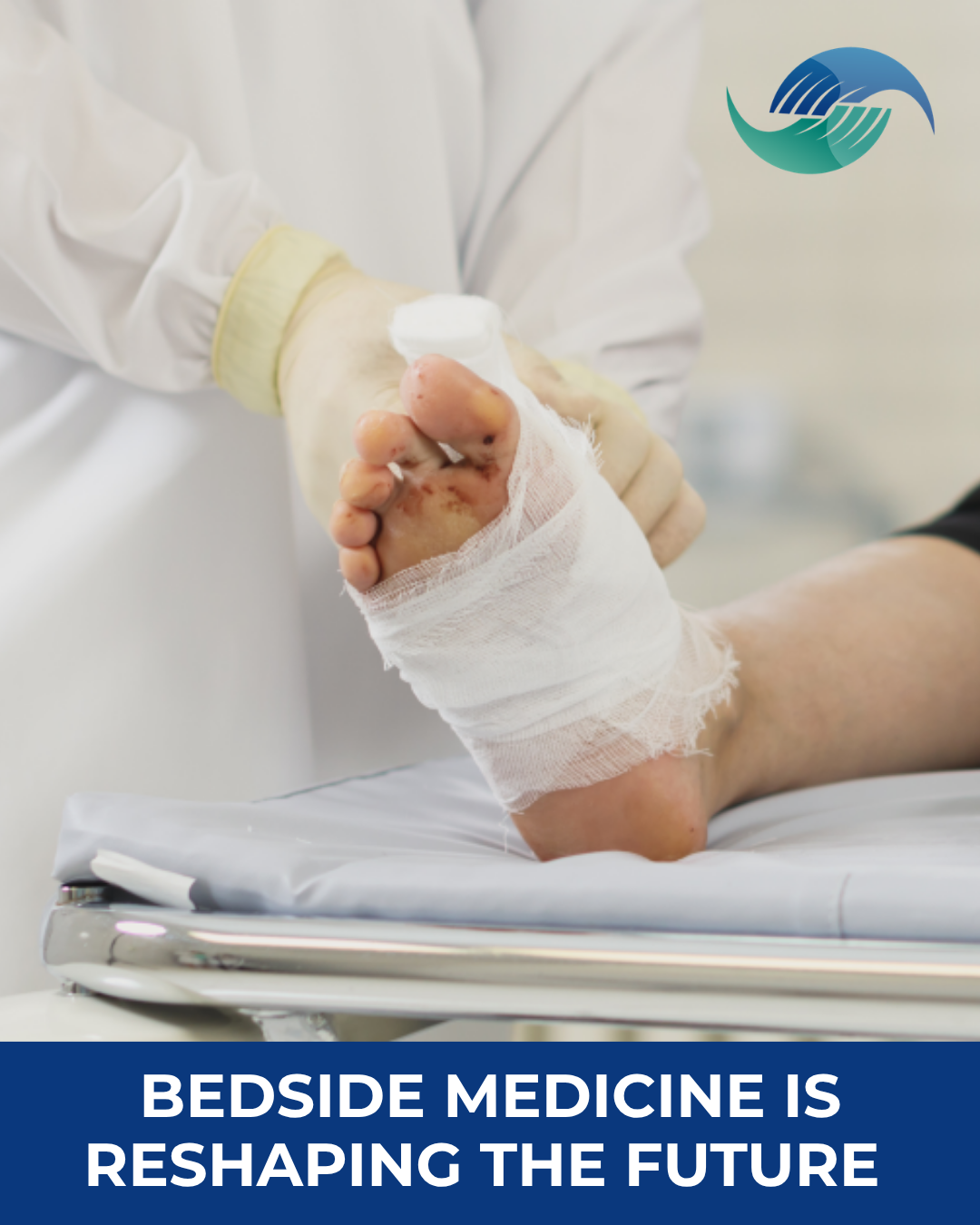
Bedside debridement lets physicians remove dead or infected tissue at the point of care instead of waiting for an operating room slot. This matters because delayed debridement stalls wound healing and raises infection risk — one large retrospective study of over 312,000 wounds found that more frequent debridement produced significantly faster, more complete healing (Wilcox et al., JAMA Dermatology, 2013). Across acute care hospitals, LTACHs, inpatient rehab, and skilled nursing facilities, this physician-led model is closing the gap between wound assessment and treatment.
What Is Bedside Debridement and Why Does Timing Matter?
Debridement — the removal of devitalized tissue, eschar, and foreign material from a wound bed — is a cornerstone of effective wound healing. When clinicians delay it because of operating room scheduling, wounds stall, bioburden increases, and complications follow.
Bedside debridement allows physicians to intervene promptly using sharp or surgical technique directly at the point of care, without compromising clinical standards. Aligning assessment and intervention in real time helps clinicians improve wound progression and reduce infection risk. The JAMA Dermatology cohort study of 312,744 wounds across 525 wound care centers found a 70.8% overall healing rate, with wounds debrided more frequently healing faster and more completely (P < .001) than those debrided less often (Wilcox et al., 2013). A separate Cochrane review of debridement methods for surgical wounds likewise underscores that timely removal of nonviable tissue is central to wound bed preparation, even as researchers continue refining which techniques work best for which wound types (Cochrane Library, 2024).
How Does Bedside Debridement Work Across Different Care Settings?
The value of point-of-care debridement shifts depending on the setting, but the underlying logic — faster intervention, less fragmentation — holds across all four:
Acute care hospitals: Bedside debridement shortens time to treatment by removing unnecessary procedural delays tied to OR availability.
LTACHs: Medically complex, often ventilator-dependent patients frequently cannot tolerate frequent transport or repeated surgical interventions, making bedside procedures a safer alternative.
Inpatient rehabilitation facilities: Faster wound stabilization keeps patients focused on functional recovery goals instead of interrupting therapy for procedural transfers.
Skilled nursing facilities (SNFs): Bedside debridement helps prevent avoidable hospital transfers and supports continuity of specialist-led wound care without disrupting the resident's care environment.
Why Do Avoidable Hospital Transfers From SNFs Matter So Much?
Hospital transfers from skilled nursing facilities carry real clinical risk, and a substantial share of them are preventable. Research using the INTERACT quality improvement framework found nursing home staff rated the majority of transfers as clinically necessary, but engagement with structured improvement tools increased the share identified as avoidable, reflecting how much transfer decisions depend on available on-site clinical support (Lamb et al., Journal of the American Geriatrics Society, 2011). Other peer-reviewed estimates have found that roughly two-thirds of nursing home hospitalizations are potentially avoidable, with infections, injuries, and cardiovascular decompensation among the leading drivers (study cited via PubMed, 2010).
Transfers are also strongly associated with adverse events. Interfacility moves are a known point of failure for pressure injury documentation and continuity of wound care, meaning each avoidable trip to the hospital is also a chance for a wound to be mismanaged, undocumented, or to worsen in transit (PMC study on pressure injury documentation across transfers). A CMS-funded national initiative to reduce avoidable hospitalizations among long-stay nursing facility residents found measurable reductions in potentially avoidable hospitalizations and emergency department visits when facilities added dedicated clinical support — evidence that keeping treatment on-site, including wound care, changes outcomes (CMS Initiative to Reduce Avoidable Hospitalizations, Final Report). By enabling debridement on-site, SNFs can manage more wound complications in place rather than defaulting to an emergency department visit or hospital admission.
→Physician-led wound care programs for skilled nursing facilities←
What Does Bedside Debridement Mean for Patients and Clinicians?
For patients, this model means faster intervention, fewer disruptions, and improved healing trajectories. Patients avoid the delays, transport risk, and care fragmentation that come with waiting for an OR booking or arranging a hospital transfer.
For clinicians, bedside debridement restores autonomy and efficiency. Physicians maintain direct oversight of wound progression, respond immediately to changes, and adjust treatment plans without handing off care to a separate surgical team or facility.
How Is Technology Changing Point-of-Care Debridement?
Technology strengthens this model without replacing clinical judgment. Advanced wound imaging, digital measurement, and AI-supported analysis improve documentation, guide debridement decisions, and enable objective outcome tracking.
These tools let clinicians intervene earlier and refine treatment strategies with precision — an increasingly important capability as CMS quality reporting now includes an objective wound-imaging measure (USWR37, Objective Measurement of Wound Surface Area with AI-based Imaging) among its approved MIPS quality metrics (US Wound Registry, Quality Measures).
How Does Bedside Debridement Support Value-Based Wound Care?
Bedside debridement aligns directly with value-based care. Rather than optimizing for procedural volume, well-run programs measure success through:
Healing rates and time-to-closure benchmarked against national data
Limb preservation and amputation avoidance
Infection reduction
Avoidance of unnecessary hospitalizations and transfers
This shift has regulatory backing. CMS has approved wound care-relevant quality measures through the US Wound Registry's Qualified Clinical Data Registry for over a decade, covering diabetic foot ulcer and venous leg ulcer healing, off-loading, and compression adherence (US Wound Registry Quality Measures; Alliance of Wound Care Stakeholders). Clinicians who report these measures have documented meaningfully better outcomes: consistent venous leg ulcer compression rose from 17% to more than 65% of visits, diabetic foot ulcer off-loading rose from 6% to nearly 60% of visits, and practitioners reporting these measures show healing rates 10% higher than non-reporting peers (Fife, Three Wound Care Quality Performance Measures Are Now Public, 2019). Bedside debridement programs that track and report these same outcome measures are positioned to demonstrate value under MIPS and other value-based contracts, not just deliver faster care.
Call to Action
If your hospital, LTACH, rehab facility, or skilled nursing partner is weighing how to reduce OR bottlenecks and avoidable transfers, WoundCentrics' physician-led teams can help design a bedside debridement protocol built around your patient population and quality reporting goals. Contact WoundCentrics to discuss a program assessment or clinical education session for your care team.
Sources
Frequently Asked Questions
Q: What is bedside debridement?
A: Bedside debridement is the removal of dead, damaged, or infected tissue from a wound performed directly at the patient's bedside using sharp or surgical technique, rather than in an operating room, allowing physicians to intervene without procedural delay.
Q: Why is delaying debridement a problem?
A: Delaying debridement lets devitalized tissue and bacterial bioburden accumulate, which stalls wound healing and increases infection risk; a study of over 312,000 wounds found more frequent debridement led to significantly faster, more complete healing (Wilcox et al., 2013).
Q: Can bedside debridement reduce hospital transfers from skilled nursing facilities?
A: Yes. By enabling on-site treatment of wound complications, bedside debridement can help skilled nursing facilities avoid transfers that research shows are frequently preventable and are associated with adverse events like pressure injuries and care discontinuity (CMS Initiative to Reduce Avoidable Hospitalizations).
Q: Is bedside debridement as safe and effective as debridement in an operating room?
A: Bedside debridement is designed to deliver the same clinical rigor as OR-based procedures, using sharp or surgical technique under direct physician oversight; the goal is to remove logistical delay, not lower the standard of care.
Q: How does technology support bedside debridement?
A: Advanced wound imaging, digital measurement, and AI-supported analysis help clinicians document wounds objectively, guide debridement decisions, and track healing outcomes over time, including CMS-recognized measures like AI-based wound surface area imaging (US Wound Registry).
Q: What outcomes do value-based wound care programs track?
A: Value-based wound care programs measure healing rates, time-to-closure, limb preservation, infection reduction, and avoidance of unnecessary hospitalizations rather than focusing on procedure volume alone.