
Supply vs. Drain: Why Some Leg Ulcers Are So Different
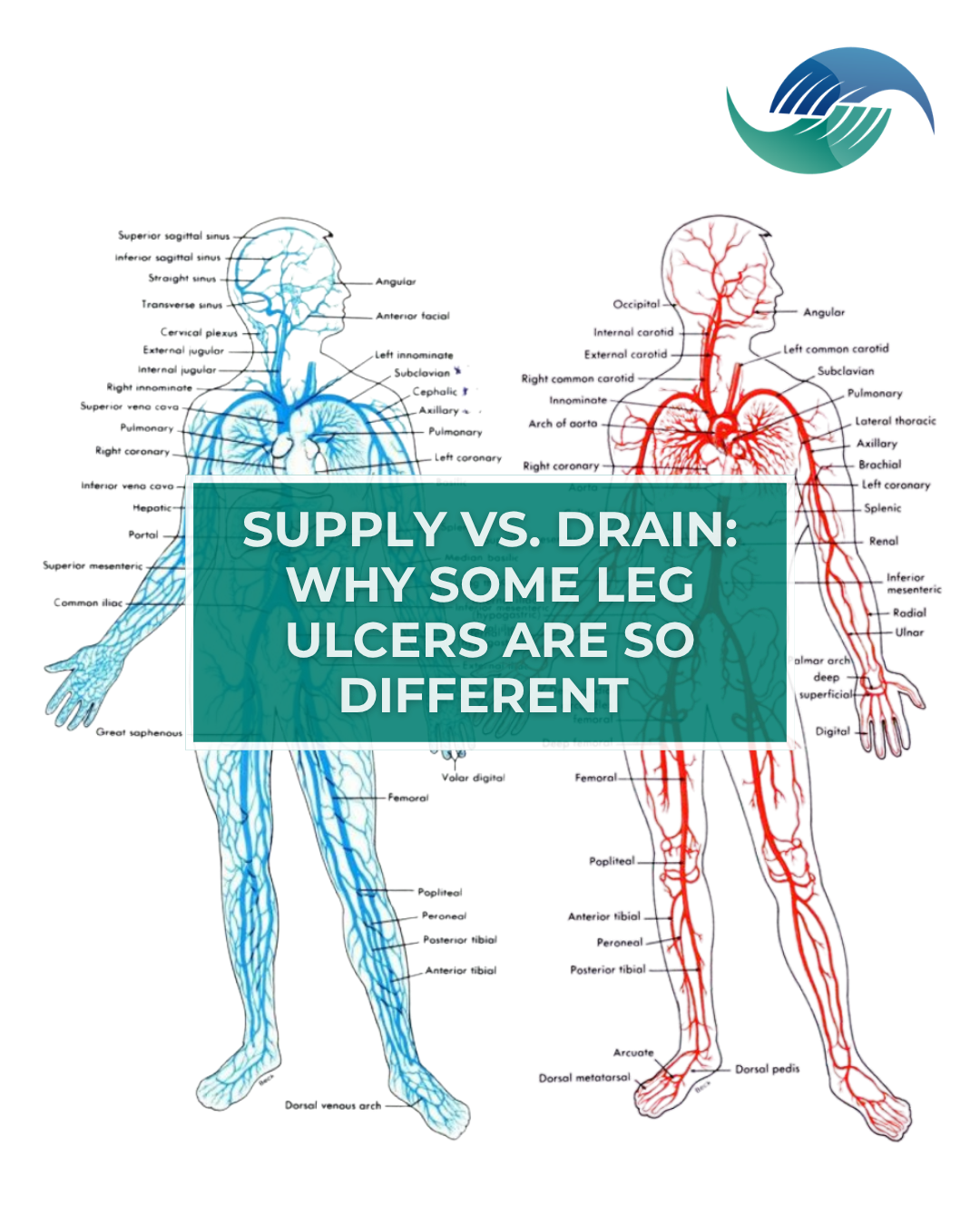
Leg ulcers usually form for one of two opposite reasons: not enough blood is getting down to the foot, or blood isn't making it back up to the heart. Arterial ulcers are caused by poor blood supply, while venous ulcers are caused by poor blood drainage. They look different, show up in different places, and need very different treatment — which is why figuring out which one you're dealing with matters more than most people realize.
Think of Your Circulation Like a Plumbing System
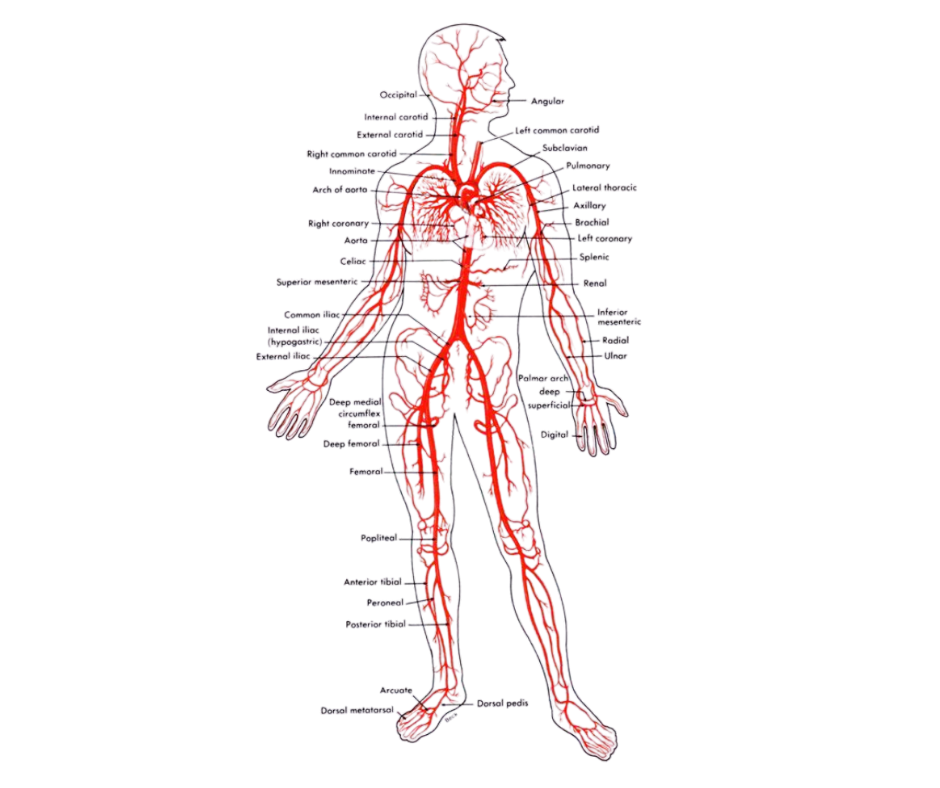
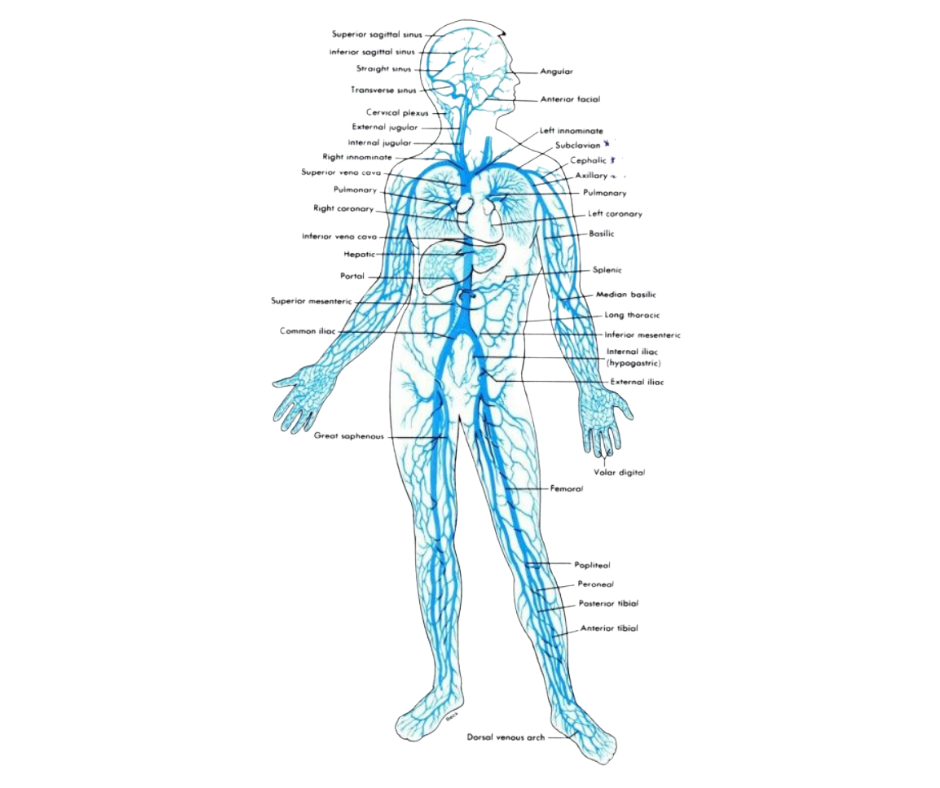
Your arteries and veins work like a two-pipe plumbing system. Arteries are the supply line — they carry oxygen- and nutrient-rich blood down to your legs and feet. Veins are the drain line — they carry blood back up to your heart.
When either side of that system breaks down, the skin doesn't get what it needs to stay healthy, and it can break down into an open wound, or ulcer. The type of leg ulcer you have usually tells you which pipe is failing.
When the Supply Line Is the Problem: Arterial Ulcers
Arterial ulcers form when the arteries carrying blood to the leg become narrowed or blocked, most often from plaque buildup (atherosclerosis) — the same process behind peripheral artery disease. Without enough oxygen-rich blood reaching the skin and deeper tissue, that tissue can start to die.
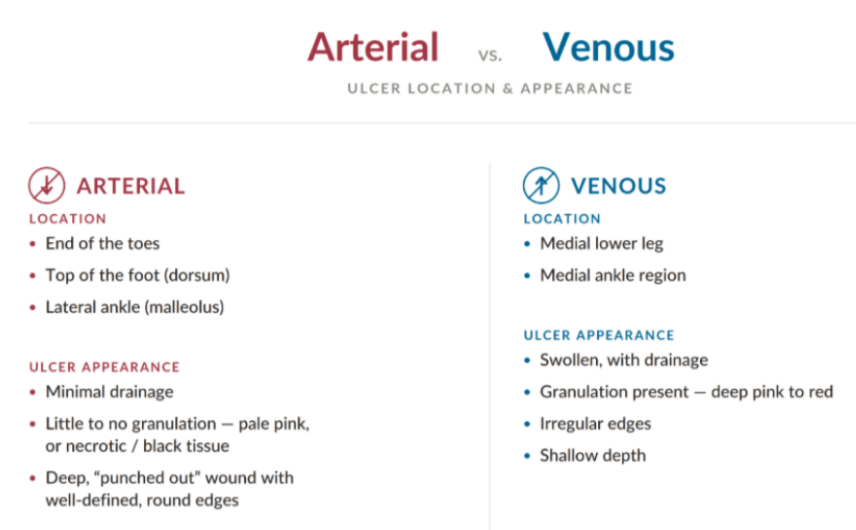
These ulcers tend to show up in predictable spots and look a specific way:
Location: toes, heels, and other bony parts of the foot, where blood supply is already thinnest (StatPearls).
Shape: deep, round, and well-defined — often described by clinicians as a "punched out" or "cookie-cutter" appearance (Advances in Skin & Wound Care).
Wound bed: pale, dry, or black tissue, with little to no healthy pink tissue.
Surrounding skin: cool to the touch, shiny, and often missing hair.
Here's the confusing part: the skin around an arterial ulcer often looks dark red, not pale, when the leg is hanging down. This is called dependent rubor — blood vessels that are starved for oxygen lose their normal tone and passively fill with blood when gravity pulls it downward, so the leg looks flushed even though circulation is actually poor (Cleveland Clinic Journal of Medicine). That redness can trick people into thinking blood flow is fine when it isn't.
Pain is often the biggest clue. Many people feel significant pain in the foot or toes, especially at night or when the leg is raised. Letting the foot hang down over the edge of the bed often brings relief, because gravity helps pull a little more blood into the foot (StatPearls). It's easy to blame this pain on the wound itself, but with poor arterial circulation, the pain is usually vague and spread across the whole foot rather than centered on the ulcer — which is an important clue for figuring out the real cause.
Treatment focuses on restoring blood flow. That can mean medications, or vascular procedures such as angioplasty, stenting, or bypass surgery to reopen or route around blocked arteries (StatPearls).
→Learn how a vascular assessment can identify the cause of a non-healing wound←
When the Drain Line Is the Problem: Venous Ulcers
Venous ulcers are the opposite problem: it's not that blood can't get down to the leg, it's that blood can't get back up. Veins rely on calf muscle movement and tiny one-way valves to push blood upward against gravity. When those valves weaken or fail, blood pools in the lower leg instead of draining out — a condition called venous hypertension (StatPearls).
Picture a backed-up drain: pressure builds, fluid leaks out into the surrounding tissue, and the skin gradually becomes thin, fragile, and prone to breaking down.
Venous ulcers have their own signature look:
Location: near the ankle, especially on the inner side of the lower leg (clinicians call this the "gaiter" area) (StatPearls).
Shape: shallow and irregular, unlike the round, punched-out look of arterial ulcers.
Drainage: typically more fluid than an arterial wound.
Surrounding skin: swelling, discoloration (often brownish), itching, and thickened or hardened skin.
Roughly 1% to 3% of U.S. adults develop venous ulcers over their lifetime, making them the most common type of leg ulcer overall (StatPearls).
Treatment focuses on improving blood return to the heart. The standard approach is compression therapy — bandages or stockings that squeeze the leg to help push blood upward — along with leg elevation and movement to activate the calf muscle pump (American Academy of Family Physicians). Compression is considered the most effective, practical first-line treatment for venous ulcers (StatPearls).
Why the Difference Matters
Both arterial and venous ulcers involve problems with the vascular system, but they call for opposite treatment strategies. Compression therapy — the mainstay of venous ulcer care — can actually be dangerous for a patient with an undiagnosed arterial ulcer, because squeezing a leg that already has poor blood supply can cut off circulation even further. That's why getting the right diagnosis before treatment starts is essential, not optional.
After all, would you fix a supply problem the same way you'd fix a clogged drain?
Understanding which system has failed — supply or drain — is the first step toward helping a wound heal and getting a patient back to moving comfortably again.
Frequently Asked Questions
Q: What is the main difference between an arterial ulcer and a venous ulcer?
A: An arterial ulcer is caused by poor blood supply to the leg (narrowed or blocked arteries), while a venous ulcer is caused by poor blood drainage from the leg (weak vein valves that let blood pool). They form in different locations, look different, and require opposite treatments.
Q: Where do arterial ulcers usually appear on the body?
A: Arterial ulcers typically appear on the toes, heels, or other bony parts of the foot, where blood supply is naturally thinnest (StatPearls).
Q: Where do venous ulcers usually appear on the body?
A: Venous ulcers usually appear near the ankle, particularly on the inner side of the lower leg, an area clinicians call the "gaiter" region (StatPearls).
Q: Why does the skin around an arterial ulcer sometimes look red instead of pale?
A: This is called dependent rubor. Oxygen-starved blood vessels lose their normal tone and passively fill with blood when the leg hangs down, making the skin look flushed even though circulation is actually poor (Cleveland Clinic Journal of Medicine).
Q: Can compression therapy be used on any leg ulcer?
A: No. Compression therapy is standard treatment for venous ulcers, but it can be harmful for arterial ulcers because it may further restrict already-limited blood flow. A proper vascular assessment should be done before starting compression (StatPearls).
Q: How is a venous ulcer typically treated?
A: Venous ulcers are typically treated with compression bandages or stockings, leg elevation, and exercises that activate the calf muscle pump to improve blood return to the heart (American Academy of Family Physicians).
Q: How is an arterial ulcer typically treated?
A: Arterial ulcers are treated by restoring blood flow to the limb, which may involve medications or vascular procedures such as angioplasty, stenting, or bypass surgery to reopen or reroute around blocked arteries (StatPearls).
If you or someone you care for has a leg wound that isn't healing, getting the right diagnosis matters as much as getting treatment started. The team at WoundCentrics provides advanced wound care designed to identify the true underlying cause — supply or drain — and support real healing. Find a WoundCentrics clinic near you to get started.
Sources